
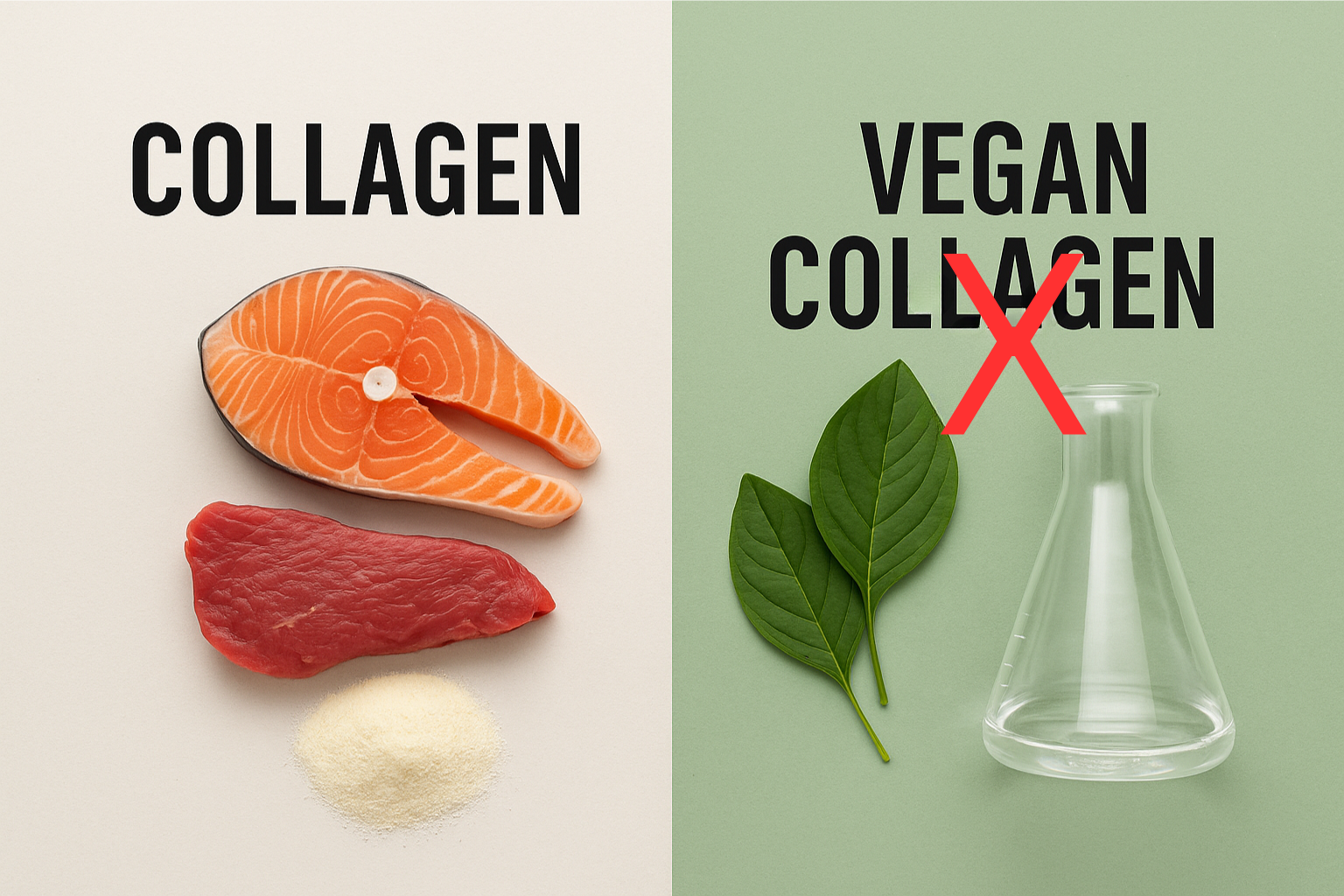
The Rise of “Vegan Collagen” — and Why It’s Not Really Collagen
In recent years, consumer demand for “plant-based” and “vegan” products has grown rapidly, reshaping the food, supplement, and beauty markets. One trend that has emerged from this shift is so-called “vegan collagen.”
At first glance, “vegan collagen” might sound like an innovative, ethical alternative to animal-derived collagen peptides. However, the term is scientifically misleading, and consumers need to understand why.
What is Collagen?
Collagen is the most abundant protein in the human body. It provides structure and strength to skin, bones, tendons, and ligaments. When hydrolysed into smaller peptides, collagen becomes highly bioavailable and can support skin elasticity, joint health, and more.
True collagen is only found in animals. It is extracted from sources such as bovine (beef), porcine (pork), fish, and poultry. At least 28 types of collagen have been identified, and Type I collagen is the most common type. Collagen contains a unique amino acid, hydroxyproline.
There are no natural plant sources of collagen.
So, What is “Vegan Collagen”?
Products marketed as “vegan collagen” are not actually collagen. Instead, they are usually plant-based formulations that may contain vitamins, minerals, and amino acids meant to support the body’s own collagen production. These blends might include ingredients like vitamin C, zinc, or certain plant proteins, which can stimulate the body’s own collagen production and can be beneficial for overall skin and connective tissue health, but they do not provide collagen itself and are not a direct replacement for animal-derived collagen
Some companies also use the term to describe lab-produced, yeast- or bacteria-fermented proteins designed to mimic certain aspects of collagen. While research in this area is ongoing, these products are not the same as natural collagen peptides in composition or proven bioavailability.
Why Does This Distinction Matter?
Consumers often seek collagen supplements to directly supply their bodies with readily absorbed collagen peptides, which can be measured and studied for their beneficial effects. When plant-based alternatives are inaccurately labelled as “collagen,” it can create confusion and dilute consumer trust.
Scientific evidence supports the benefits of animal-derived collagen peptides for skin health, joint support, and overall vitality. (Collagen Peptide References)
No plant-based product can currently replicate the structure or function of these peptides.
Transparency Builds Trust – Honest Labelling
As an association representing gelatin and collagen manufacturers across the Asia Pacific region, GMAP supports honest labelling and science-based communication.
We encourage consumers to carefully examine product ingredient lists and understand what they are truly purchasing.
If you are looking for collagen, ensure the product contains hydrolysed collagen peptides sourced from animal materials.
If you prefer plant-based ingredients to support natural collagen production, ensure these products are clearly labelled and not presented as a direct collagen source.


